AYUB Name Arabic Calligraphy Vector: A Designer's Guide
Finding a typeface that carries the weight of tradition while fitting seamlessly into modern digital workflows is a common challenge. The AYUB Name Arabic Calligraphy Vector is not just another script font; it is a specialized design asset that bridges the gap between classical Islamic art and contemporary vector graphics. For designers, marketers, and entrepreneurs looking to incorporate authentic Arabic typography into their branding, understanding the nuances of this specific calligraphy vector is essential for creating impactful visual communication.
Visual Character and Stylistic Roots
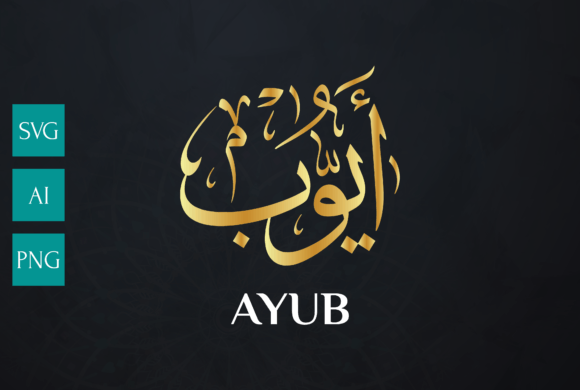
At its core, the AYUB design draws from the rich history of Islamic calligraphy, likely echoing styles found in Thuluth or Naskh scripts, though it is stylized specifically for the name "Ayub." The visual personality of this typeface is defined by its fluid, connected strokes and balanced proportions. Unlike rigid serif fonts or geometric sans serif fonts, Arabic calligraphy relies on the interplay of thick and thin lines created by the angle of the pen. This vector captures that organic energy but renders it in a scalable format.
The appeal lies in its duality. It feels sacred and historical due to the religious significance of the name and the calligraphic tradition, yet the vector execution makes it sharp, clean, and infinitely scalable. This makes the AYUB Name Arabic Calligraphy Vector a premium font choice for projects that require high fidelity. Whether you are working on a small icon or a massive billboard, the curves remain smooth, preserving the brand identity you are trying to build.
Practical Applications in Modern Design
The versatility of the AYUB vector extends far beyond simple text replacement. In the realm of logo design, this asset shines. A creative font like this provides an immediate cultural anchor. For a business named Ayub, or a brand looking to evoke values of patience, resilience, and faith (associated with the Prophet Ayyub), using this vector as a primary logotype creates instant recognition.
Consider the following practical applications for this asset:
- Islamic Wall Art and Decor: This is the most natural fit. The vector is perfect for metal art, canvas prints, and wall stickers. Because it is a vector, you can scale it to fit a living room wall or a small greeting card without losing the intricate details of the flourishes.
- Packaging and Product Design: For artisanal products, food packaging, or editorial design targeting Middle Eastern markets, this font adds a layer of authenticity. It works well on brochures, flyers, and product labels.
- Digital and Social Media: Social media graphics require bold, readable elements. The AYUB vector can serve as a watermark, a profile picture element, or a header image for Ramadan campaigns and religious observances. It ensures visual hierarchy because the eye is naturally drawn to the complex, flowing forms of the script.
Integrating AYUB into Your Brand Strategy
When utilizing the AYUB Name Arabic Calligraphy Vector for commercial purposes, the goal is brand perception. Typography speaks before the words are even read. Using a high-quality Arabic calligraphy vector suggests that your brand values craftsmanship and cultural respect. It moves a brand away from looking generic (using standard system fonts) to looking bespoke and professional.
However, readability must always be balanced with artistry. While calligraphy is beautiful, it can sometimes be difficult to read for those unfamiliar with the script. If your target audience includes non-Arabic speakers, use the AYUB vector as a decorative display font or a logo mark, paired with a clean sans serif font for the body text. This font pairing strategy ensures that your message is understood while the aesthetic remains intact.
Technical Considerations and File Formats
The availability of the AYUB vector in formats like SVG, PNG, and AI is a significant advantage for web design and print production.
- SVG (Scalable Vector Graphics): This is the gold standard for web design. It keeps the file size small and ensures the lines are crisp on any screen resolution, from mobile phones to 4K monitors. It is essential for modern typography applications.
- AI (Adobe Illustrator): For editorial design and packaging design, having the source file allows you to customize the color, add textures, or modify the kerning to fit a specific layout.
- PNG: Best for quick use in social media graphics or presentations where editing capabilities are less important than ease of use.
Before finalizing a project, always test the vector in its intended environment. Print a proof for physical items like posters or t-shirts to ensure the ink density looks right. For digital use, check the contrast against your background to ensure the lettering pops. This attention to detail separates amateur work from professional design assets.
Elevating Creative Projects with Cultural Typography
Ultimately, the AYUB Name Arabic Calligraphy Vector is more than just a set of lines; it is a tool for storytelling. Whether you are creating a personalized gift for a wedding, designing a header for a blog, or developing a full brand identity for a startup, this vector provides a connection to a deep artistic heritage.
By treating this asset with the same strategic rigor you would apply to a serif font or a handwritten font, you can unlock its full potential. Focus on the context of the name, the scalability of the format, and the emotional resonance of the style. When used thoughtfully, the AYUB vector transforms standard layouts into memorable visual experiences.